Poem of the Week, by Craig Arnold

Have you ever wanted to write about your own life, but don’t know where to begin? Focus in on tiny, specific memories, and that’s all you need. There’s plenty of room in our Memoir in Moments online workshop this coming Tuesday, August 18. Click here for the details – I’d love to see you in the room. 

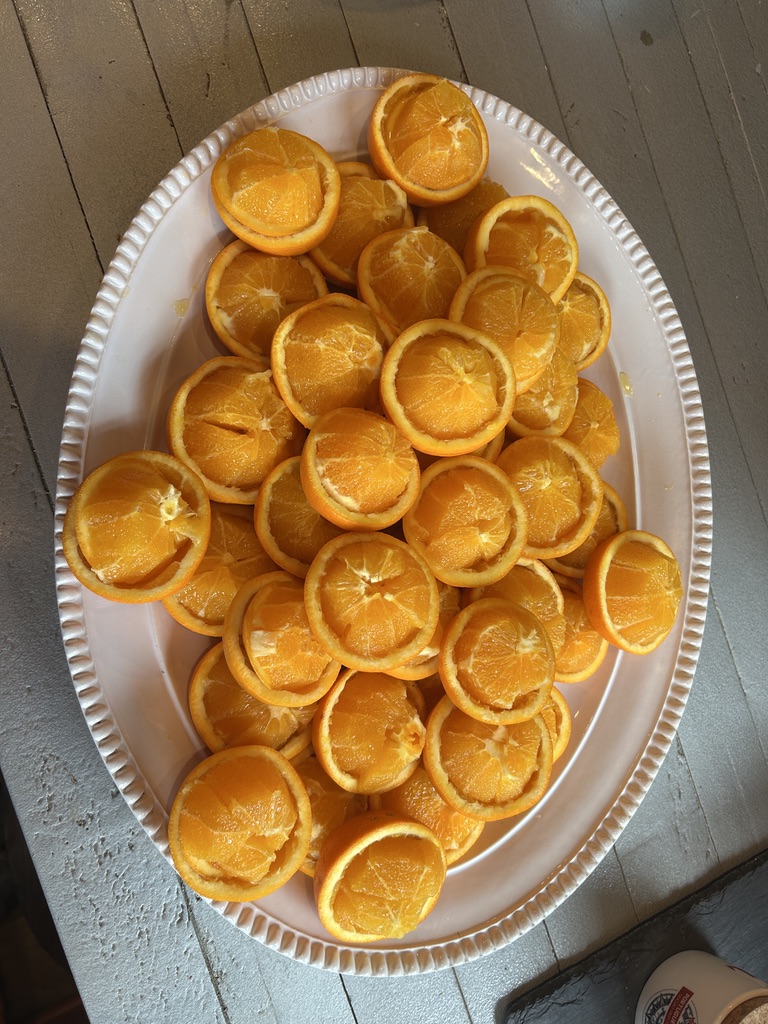
My craving for grapefruit was uncontrollable when I was pregnant, to the extent I would buy ten-pound mesh bags of it and hide three or four in various rooms and drawers, just in case someone came over and tried to take my grapefruit. This is not rational, but neither are many things.

This poem stunned me because it describes exactly the way I eat grapefruit. That cloud of oil, the pearly cells, the pooling juice.

Meditation on a Grapefruit, by Craig Arnold

To wake when all is possible
before the agitations of the day
have gripped you
                To come to the kitchen
and peel a little basketball
for breakfast
              To tear the husk
like cotton padding        a cloud of oil
misting out of its pinprick pores
clean and sharp as pepper
                             To ease
each pale pink section out of its case
so carefully       without breaking
a single pearly cell
                    To slide each piece
into a cold blue china bowl
the juice pooling       until the whole
fruit is divided from its skin
and only then to eat
                  so sweet
                            a discipline
precisely pointless       a devout
involvement of the hands and senses
a pause     a little emptiness

each year harder to live within
each year harder to live without

Click here for more information about poet Craig Arnold. Today’s poem first appeared in Poetry in October 2009. 

alisonmcghee.com
My podcast: Words by Winter
Poem of the Week, by Jane Hirshfield

​I’d love to see you in the Zoom room for one of our upcoming half-day creative writing workshops! Plenty of room in all; click here for all the details. 
August 18: Memoir in Moments
August 25: The Freedom of Form 
September 9: The Art of Writing Picture Books
September 10: Poetry, from Flicker to Flame 

Once, after a long time away, I returned to my tiny house in Vermont. It was early evening and I lay on the couch reading. Everything was quiet and still except for the turn of the pages.

This was when mice began to emerge from their hiding places. One crawled up the arm of the couch, another up the curtains next to me. One scuttled by in the hallway, another on the countertop.

More and more arrived. It came to me that this was their house too, theirs more than mine because I was hardly ever there. The silent woman on the couch, barely moving, was nothing to them.

In a Room with Many Windows, by Jane Hirshfield

In a room with many windows
some thoughts slide past uncatchable, ghostly.
Three silent bicyclists. Slowly, a woman on crutches.
It is like the night you slept out on the sandy edge of a creek bank,
feeling the step of some light, clawed thing on your palm,
crossing to drink. You were nothing to it.
Hummock. Earth clump. Root knob wild in the dark.
Like that thirsty creature, to you.
You could guess it, but you can’t name it. 


Click here for more information about Jane Hirshfield. Today’s poem first appeared in The Beauty, published in 2015 by Knopf. 
alisonmcghee.com
My podcast: Words by Winter 
Poem of the Week, by Marie Howe

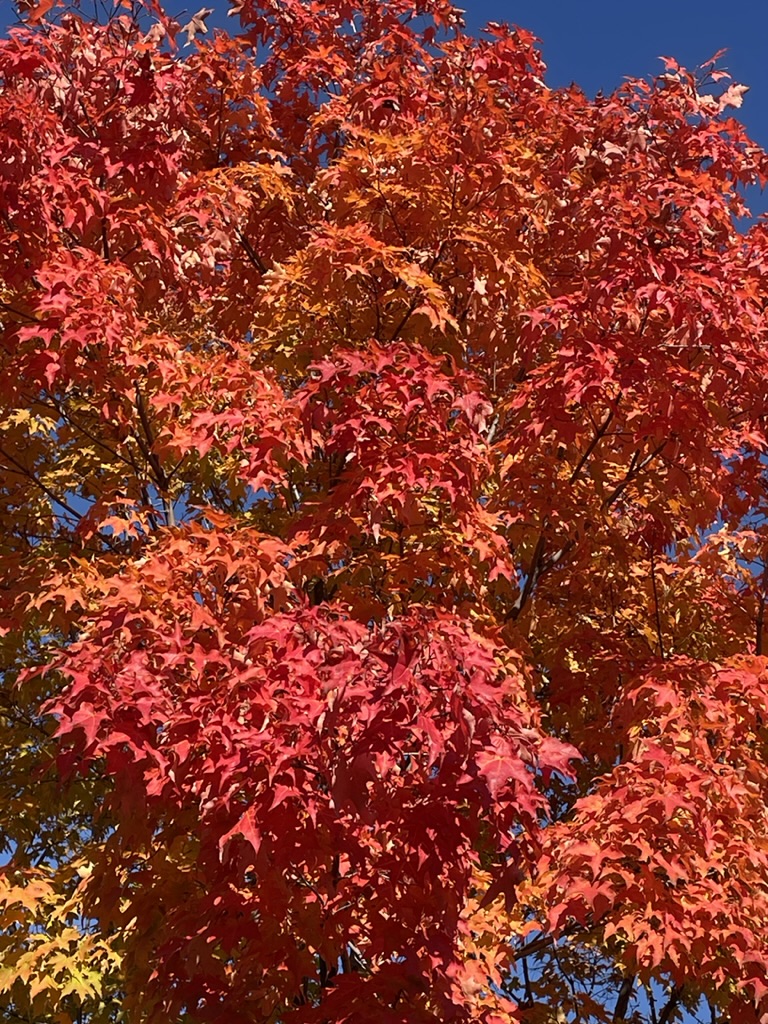
The leaves of an enormous maple tree in the front yard of a house on the next block turn pink in autumn. For twenty years I’ve admired this tree. It dwarfs the not-small house. It owns the yard. The grass beneath it disappears under drifts of giant pink leaves. I walk beneath that tree every day and every day I’m grateful for it.

It’s summer now, but in a few weeks green will give way to pink. Maybe today I’ll write a note to the people who live in the House of the Giant Maple and tell them how much I love their tree. Maybe I’ll include a copy of this poem.

The Copper Beech, by Marie Howe 

Immense, entirely itself,
it wore that yard like a dress,

with limbs low enough for me to enter it
and climb the crooked ladder to where

I could lean against the trunk and practice being alone.

One day, I heard the sound before I saw it, rain fell
darkening the sidewalk.

Sitting close to the center, not very high in the branches,
I heard it hitting the high leaves, and I was happy,

watching it happen without it happening to me. 

Click here for more information about Marie Howe, who is one of my favorite poets. Today’s poem first appeared in What the Living Do, published in 1997 by W. W. Norton & Co.

alisonmcghee.com
My podcast: Words by Winter
Poem of the Week, by Rita Dove

Friends, I’m offering four one-afternoon creative writing workshops via Zoom in August and September. Click here for all the details. Maybe you should treat yourself to a three-hour creative reset – I’d love to see you in the Zoom room!

A few weeks ago I was on an MFA panel with three other writers, talking about the poems we had contributed to The Country in the Mirror: Poems of Protest & Witness. An audience member wondered how to approach difficult topics when writing for children.

Don’t be afraid of laughter, one of the writers said. Don’t be afraid of joy. My God, don’t we need it now more than ever? It felt as if the whole room exhaled when she said this, and I thought of this poem.

Postlude, by Rita Dove

Stay by the hearth, little cricket.
—Cendrillon


You prefer me invisible, no more than
a crisp salute far away from
your silks and firewood and woolens.

Out of sight, I’m merely an annoyance,
one slim, obstinate wrinkle in night’s
deepening trance. When sleep fails,

you wish me shushed and back in my hole.
As usual, you’re not listening: time stops
only if you stop long enough to hear it

passing. This is my business:
I’ve got ten weeks left to croon through.
What you hear is a lifetime of song.

Poem of the Week, by Rebecca Bornstein

A long time ago I needed to get some legal forms to an office a few miles away. It was winter, snowing, skiddy roads. My car slid right off the street into an ice-encrusted snow island between two lakes.

Car after car drove past. I was about to trudge home to get help when an ancient station wagon pulled off the road, hazards flashing. Five Spanish-speaking grinning men leaped out, ran behind my car and motioned me to put it in drive. They pushed me back onto the street, still laughing, waved, and jumped back in their beater.

When I think of the word “helper” it is those men who come shimmering up in my mind.

Love Poem to Taco Bell, by Rebecca Bornstein

Full-on, no bullshit, no irony, yes Taco Bell 
where I can almost always pull together the 
cash to get dinner, at my brokest 
scrounging up enough change  
for the pillowy warmth of a bean burrito,  
extra red sauce, meant to be eaten  
behind the steering wheel in a parking lot 
or while driving, the wrapper crumpled up  
and thrown on the passenger side floor, 
leftover napkins stashed in the glovebox.  
In high school we’d ditch seventh period  
and drive 10 miles down I-5 to the closest town  
big enough to have a Taco Bell,  
where we’d house as much food as we could 
pay for, lounging in the pinkpurplegreen vinyl  
or the metal swivel chairs we’d knock knees under,  
giving each other dares around fire sauce,  
hoarding packets of mild sauce to douse everything.  
And forever, my love to the Taco Bell employees,  
who took my order when I was drunk or high or crying,  
who listened and fed me without too much judgment  
through high school and college and my thirties,  
and a special love for the two who pushed my car  
through the drive-thru, once, when it broke down  
mid-order. I couldn’t afford a tow until payday.  
They let me leave it in the lot. 
This is how I know labor is entitled to all it creates,  
and that given a chance most of us are helpers, 
we want to help people and to be helped  
by people, amidst the absolute and delicious  
loveliness of ordinary things. 

Click here for more information on Rebecca Bornstein. Today’s poem was first published in April 2026 by the Academy of American Poets. 
alisonmcghee.com
My podcast: Words by Winter
Poem of the Week, by Bao Phi

Many of my students at South High School were refugee kids from southeast Asia –Vietnam, Laos, Thailand–and I studied how to pronounce their names, because names are important. The surprised look on one girl’s face the first day of school during roll call: You said my name right!

Later, I taught at an under-the-radar state university where many students were also refugees. At one graduation, a faculty member mispronounced virtually all the names of the graduates as they walked across the stage for their diplomas. He seemed to think it was funny, as if he were somehow cute, mangling their names one after another.

I sat in the audience seething, thinking of the love and hope and care all parents bestow when they name their children. This poem feels like redemption.

Ego-Tripping as Self-defense Mechanism for Refugee Kids Who Got Their Names Clowned On, by Bao Phi

My given name, Thiên-bảo, translates to
treasure from heaven.
An immediate reason for my being indecipherable

the moment it stung
unfamiliar tongue
so soon after “hello.”
I would finally like to thank my parents for what I once thought of

as an unpronounceable curse
that I’d have loved to bleach—
because everyone who has ever addressed me from bullies to crushes to haters
has had no choice
but to call me
valuable. 


Click here for more information about the wondrous poet, picture book writer, and spoken word artist Bao Phi. 

alisonmcghee.com
My podcast: Words by Winter
Poem of the Week, by Chen Chen

Some things are hard for me, like remembering the washers when I’m putting together a bed from a giant box with indecipherable instructions and lots of diagrams and arrows (are washers really necessary? Yes, Alison, they are).

It is when I finally finish the task, only to notice all the washers patiently waiting and realize I now have to do the whole thing over again, that I take a deep breath and recite one of my guiding mantras: Alison, you are not a jigglypuff, not yet a wigglytuff.

Thank you, Chen Chen, for many things, especially that line. Here’s to saying no to people who tell you you’re a no. To everyone who stands up for others, known or not. Most of all, to the absolute joy of being exactly who you are in the midst of people who love you for exactly that.

Summer, by Chen Chen

You are the ice cream sandwich connoisseur of your generation.

Blessed are your floral shorteralls, your deeply pink fanny pack with travel-size lint roller just in case.

Level of splendiferous in your outfit: 200.

Types of invisible pain stemming from adolescent disasters in classrooms, locker rooms, & quite often Toyota Camrys: at least 10,000.

You are not a jigglypuff, not yet a wigglytuff.

Reporters & fathers call your generation “the worst.”

Which really means “queer kids who could go online & learn that queer doesn’t have to mean disaster.”

Or dead.

& promise.

Instead, queer means, splendiferously, you.

& you means someone who knows that common flavors for ice cream sandwiches in Singapore include red bean, yam, & honeydew.

Your powers are great, are growing.

One day you will create an online personality quiz that also freshens the breath.

The next day you will tell your father, You were wrong to say that I had to change.

To make me promise I would. To make me promise.

For more information on Chen Chen, please check out his website.

alisonmcghee.com
My poems podcast, Words by Wintercan be found here.

Poem of the Week, by Lucille Clifton

Did you ever read the astonishing novel Feed, by M.T. Anderson? In it, humans walk through a world where constant ads present themselves wherever they go, shimmering in the air, instantly absorbed.

The news is like that these days for me. No need to read it; everything that’s happening is already in me, by osmosis. To stay sane I hit delete over and over, but still, ask me anything about world events and I already know it all.

But then! I watched the new Presidential Library dedication the other night: The Obamas, John Legend, Springsteen, all the performers and speakers, and everything in me suddenly hit pause. Hit rewind. Hit play, and play, and play again.

HOPE. Hope is a verb, a choice, action. Hope is joy. Hope is the thing with feathers, the long view in the midst of all the daily assaults. Wow did I need reminding of that. Afterward I sat scrolling the artists who feed my soul. Thank you, Jacob Collier, thank you Jon Batiste, thank you musicians, visionaries, poets. Thank you Lucille Clifton.

Won’t You Celebrate with Me, by Lucille Clifton

won’t you celebrate with me
what i have shaped into
a kind of life? i had no model.
born in babylon
both nonwhite and woman
what did i see to be except myself?
i made it up
here on this bridge between
starshine and clay,
my one hand holding tight
my other hand; come celebrate
with me that everyday
something has tried to kill me
and has failed. 


Click here for more information about the one and only Lucille Clifton.

alisonmcghee.com
My podcast: Words by Winter
Poem of the Week, by C.L. O’Dell

When I was little the state fair concessionaire stands sold pink puffs of spun sugar in paper cones, mesh bags of tiny buttered salt potatoes, paper containers filled with fried fat-bellied clams glistening with oil. Paper cups filled with lemonade made from a squeezed lemon stirred with sugar and cold water.

A single afternoon at the New York State Fair always shimmers up in my mind, me and my father, that man I was so often so afraid of but not on that day, not on that one day when I sat on a red stool beside him, under a red awning there at the fair, drinking lemonade and eating those salty buttered baby red potatoes and fried clams he treated me to.  

I was seven and he was thirty-one and he was happy, and I was happy too.

Decades later I stand in my kitchen making lemonade in just that way: A single lemon, big spoonful of sugar, water cold from the tap. Stir and stir and stir.

Forsythias, by C.L. O’Dell

I think about time.
The forsythias
and the man singing
in the car ahead of me.

When I enter the space
the same shape
he made a moment
before me,

where is the music,
the taste of honey
in his mouth and now
mine, the thought

of kissing his wife good-bye
and the words of a song
lifting off my tongue
as if from memory, but his?

What is mine stays with me,
my heart in the glitter
of his heart. My dreams
have no bones. Love

is never saved in layers
of rock. So much of me
will never be found
on this earth.

For more information about C.L. O’Dell, please visit his website.
alisonmcghee.com
Words by Winter: my podcast